 |
Proposal to College for an
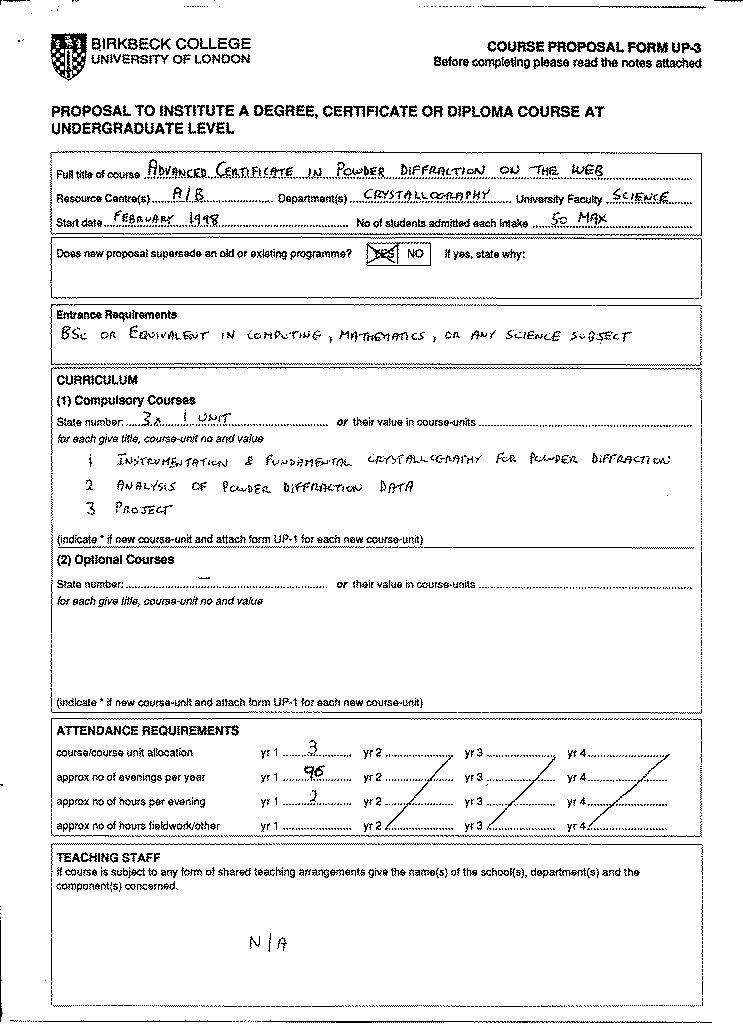
Advanced Certificate in Powder Diffraction on the Web
Department of Crystallography, Birkbeck College, University of London |
|
|
Proposal to College for an
Advanced Certificate in Powder Diffraction on the Web
Department of Crystallography, Birkbeck College, University of London |
 Welcome Page
 Course Index
 Administration
 CDCO
CDCO
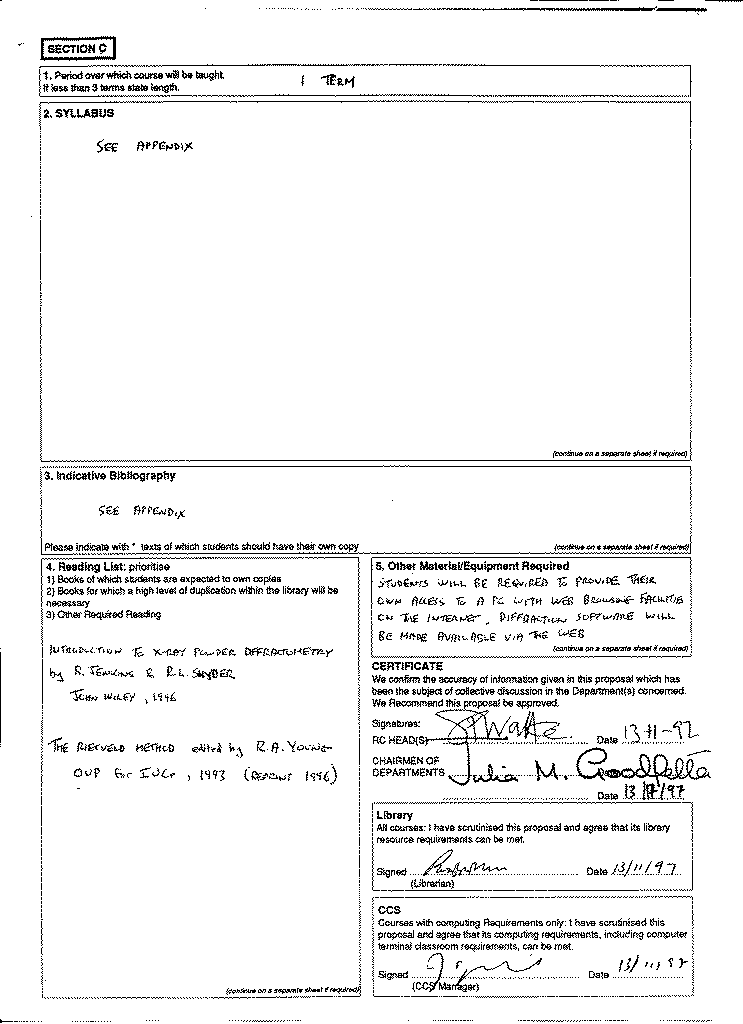
| College Course Proposal Forms |
| Syllabus |
| Timetable |
| Text and Reference Books |
| Appendix A (main proposal) |
| Appendix B |
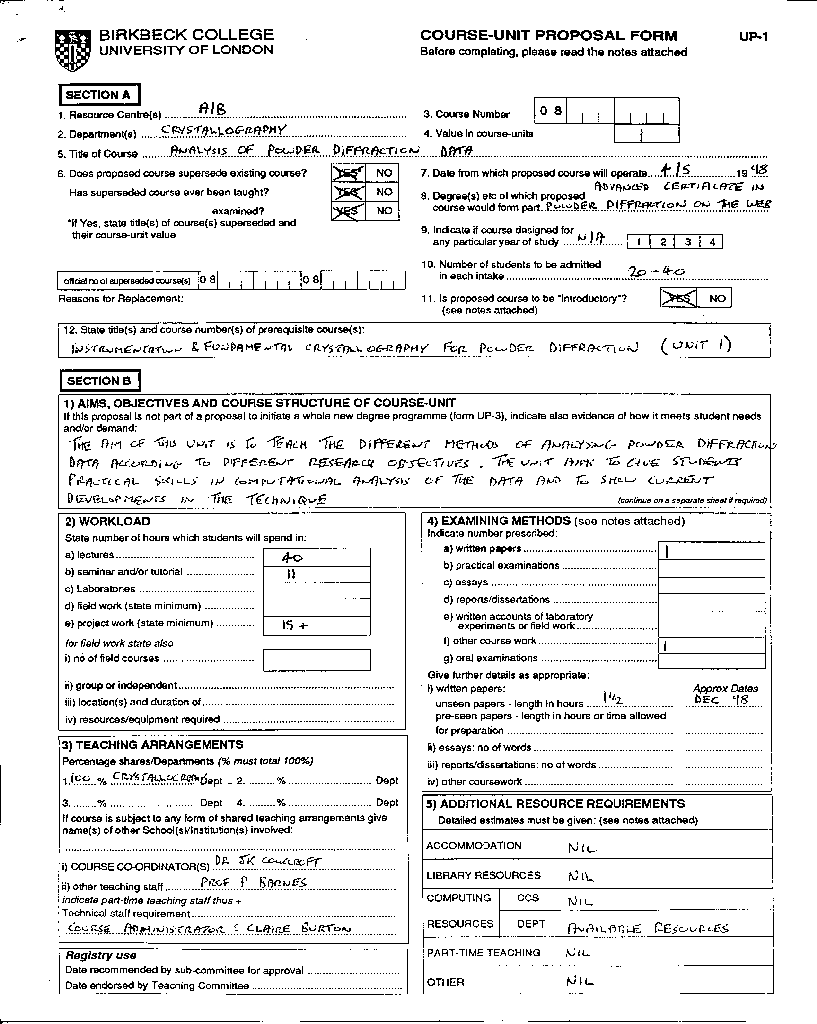
| UP3 | UP1 (for Unit 1) | ||
 |
 |
 |
 |
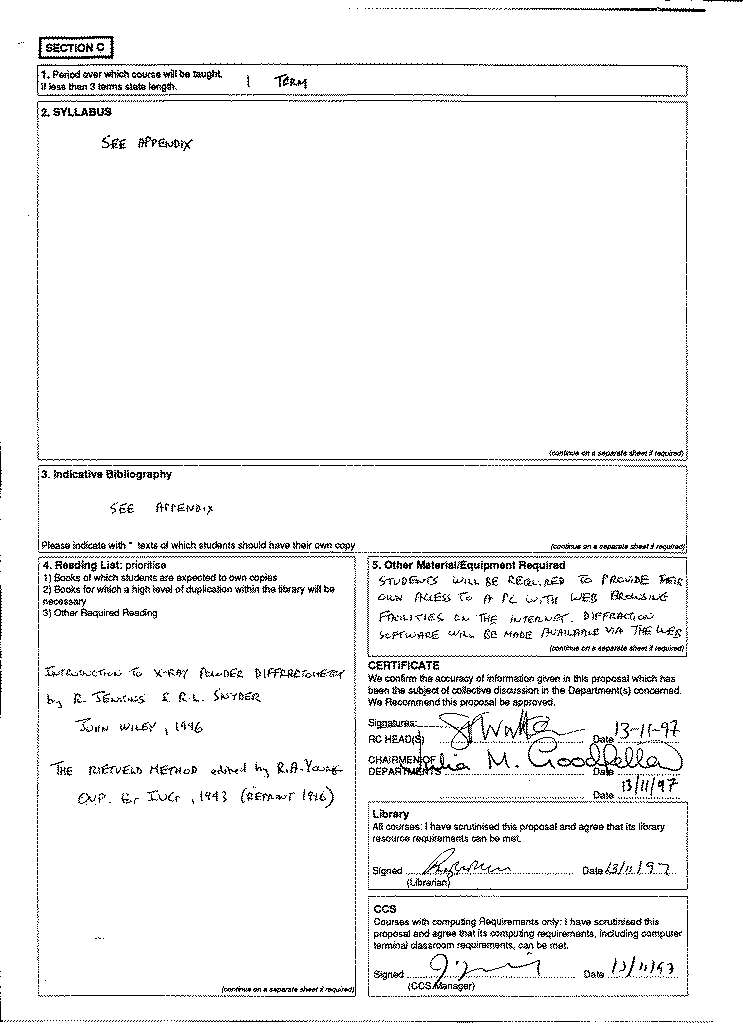
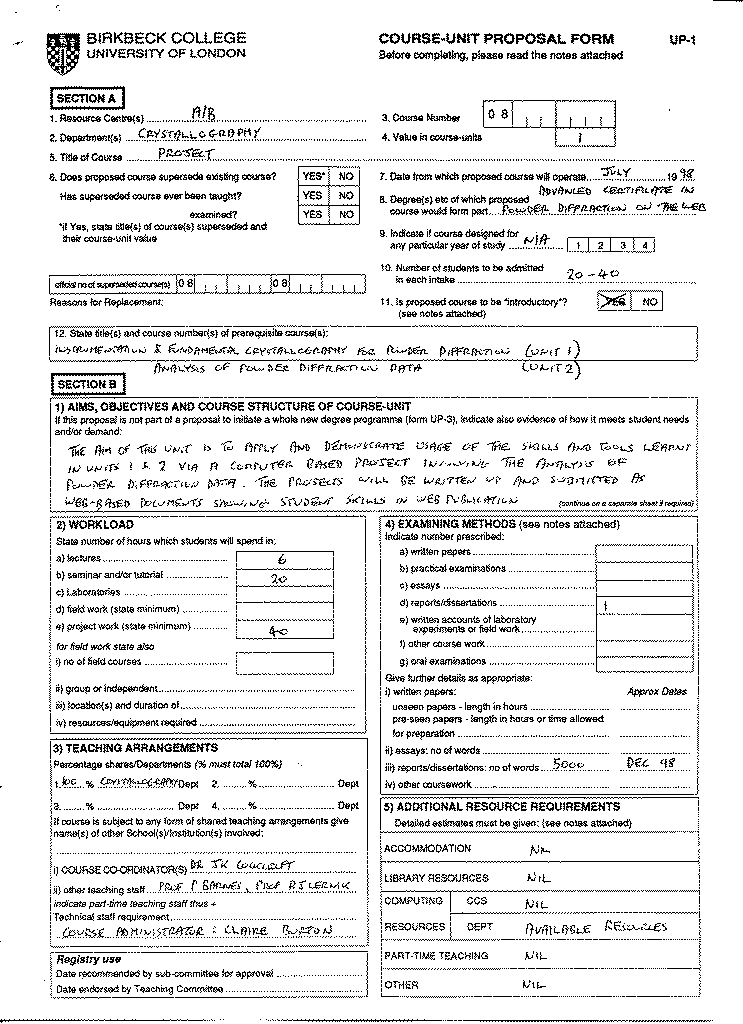
| UP1 (for Unit 2) | UP1 (for Unit 3) | ||
 |
 |
 |
 |
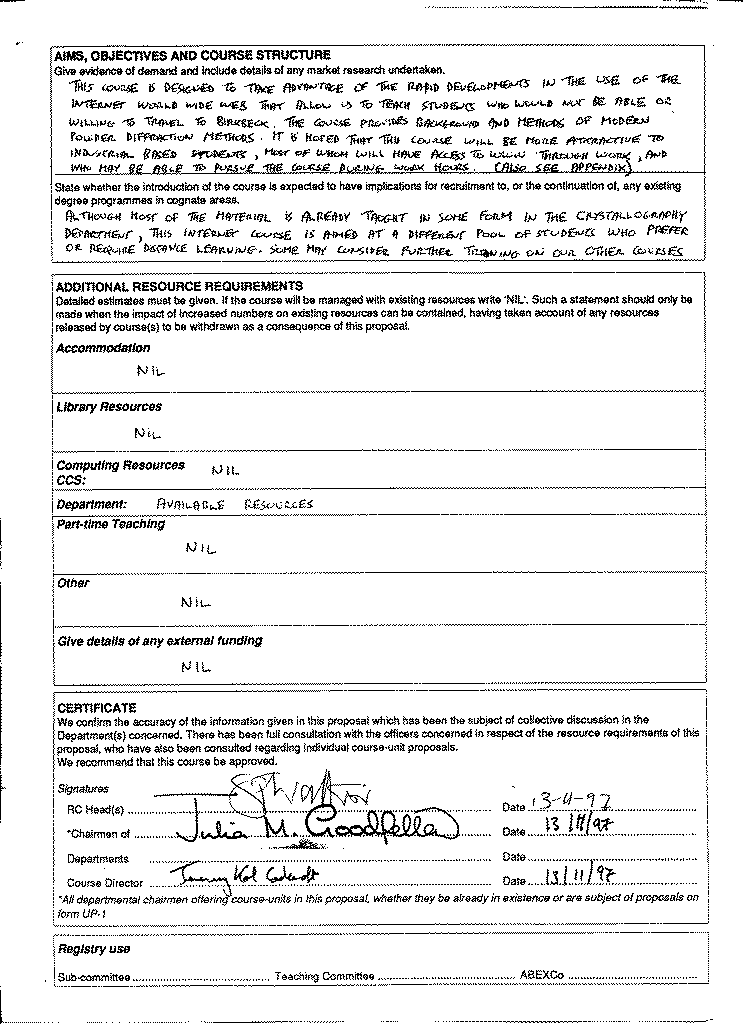
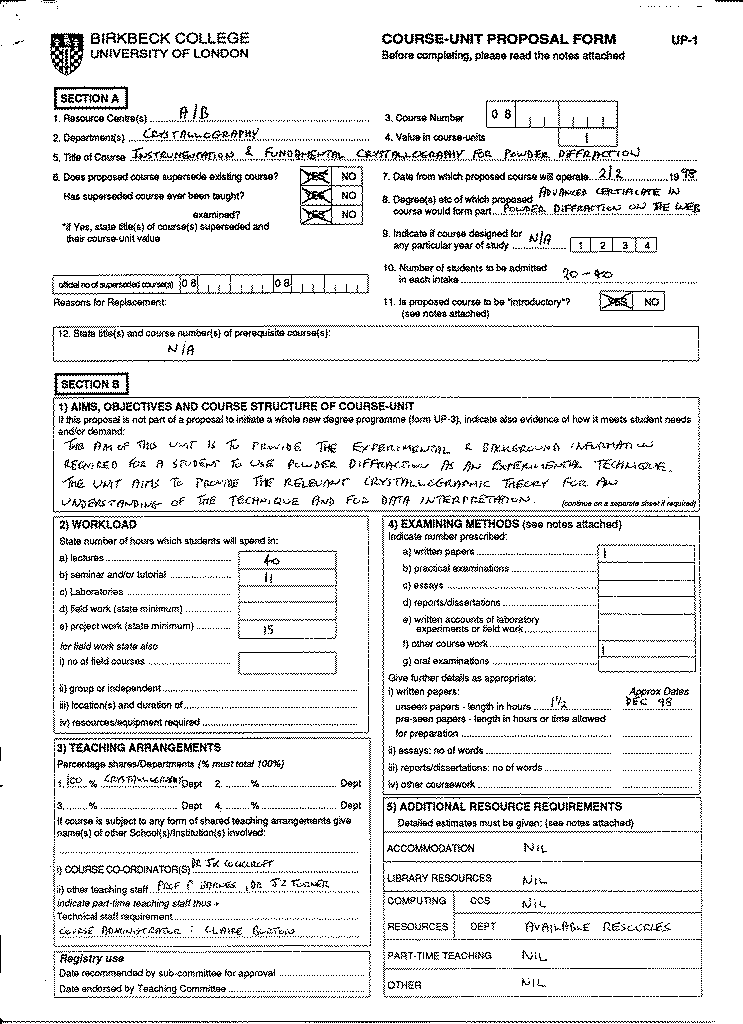
UNIT 1: Instrumentation & Fundamental Crystallography for Powder Diffraction
UNIT 2: Analysis of Powder Diffraction Data
UNIT 3: Project
| TERM 1 | ||||
|---|---|---|---|---|
| Week | Release Date | Lecture | Topic | Lecturer |
| 1 | Feb 2 | Introduction to Powder Diffraction | Overview & General Applications | PB |
| 2 | Feb 9 | Instrumentation I | Laboratory Methods | JKC |
| 3 | Feb 16 | Instrumentation II | Synchrotron X-ray Sources & Diffractometers | PB |
| 4 | Feb 23 | Diffraction I | Scattering from Arrays of Atoms, d-spacings, Diffraction from Single Crystals, Powders, & Non-crystalline Materials | PB |
| 5 | Mar 2 | Instrumentation III | Neutron Sources & Diffractometers | JZT |
| 6 | Mar 9 | Diffraction II | Structure Factors & Intensities | PB |
| 7 | Mar 16 | Data Acquisition | Qualitative, Quantitative, Structure Refinement, Structure Solution, Thermodiffractometry, Real-time | PB |
| 8 | Mar 23 | Symmetry I | Symmetry Elements, Crystal Systems, Bravais Lattices | JKC |
| 9 | Mar 30 | Symmetry II | Point Groups & Laue Classes, Space Groups, Systematic Absences, Practical | JKC |
| 10 | Apr 6 | JCPDS Database I | Contents & Usage | JKC |
| 11 | Apr 14 | JCPDS Database II | Qualitative Analysis Practicals | PB |
| (2 weeks break - N.B. Easter Monday is 13 Apr 1998) | ||||
| TERM 2 | ||||
| Week | Release Date | Lecture | Topic | Lecturer |
| 1 | May 4 | Indexing I | Standards, Unit Cell Refinement, Practical | JKC |
| 2 | May 11 | Indexing II | Methods & Programs | JKC |
| 3 | May 18 | Indexing III | Unit Cell Identification Practicals | PB |
| 4 | May 25 | Peak Shape & Width | Peak-Shape Functions, Resolution Function, Peak Broadening, Stress, Strain | PB |
| 5 | Jun 1 | Structure Refinement I | Rietveld Method, Least Squares, R-factors | JKC |
| 6 | Jun 8 | Structure Refinement II | Simple Structures Practical | JKC |
| 7 | Jun 15 | Quantitative Analysis | Methods & Errors | PB |
| 8 | Jun 22 | Structure Refinement III | More Complex Structures, Constraints & Restraints | JKC |
| 9 | Jun 29 | Structure Refinement IV | Structural Phase Transitions & Practical | PB |
| 10 | Jul 6 | Structure Solution | Whole Pattern Fitting, Structure Solution Methods | JKC |
| 11 | Jul 13 | Publication | Interpreting Crystallographic Journals, CIF, & Structural Databases | JKC |
| TERM 3 | ||||
| Week | Release Date | Lecture | Topic | Lecturer |
| 1 | Jul 20 | Presentational Skills | Writing HTML. GIFs, Presenting Crystallographic Results | JZT |
| 2 | * | Project | Individual Student Project Work | PB/JKC/RJC |
| 3 | * | Project | Individual Student Project Work | PB/JKC/RJC |
| 4 | * | Project | Individual Student Project Work | PB/JKC/RJC |
| 5 | * | Project | Individual Student Project Work | PB/JKC/RJC |
| 6 | * | Project | Individual Student Project Work | PB/JKC/RJC |
| 7 | * | Project | Individual Student Project Work | PB/JKC/RJC |
| 8 | * | Project | Individual Student Project Work | PB/JKC/RJC |
| 9 | * | Project | Individual Student Project Work | PB/JKC/RJC |
| 10 | * | Project | Individual Student Project Work | PB/JKC/RJC |
| 11 | * | Project | Individual Student Project Work | PB/JKC/RJC |
(* Project work to be fitted around summer vacation)
Late November - Submission of Project Work
Early December - Written Examination
* Highly recommended textbooks
UNIT 1: Instrumentation & Fundamental Crystallography for Powder Diffraction
UNIT 2: Analysis of Powder Diffraction Data
Advanced Certificate
in
Powder Diffraction on the WEB
A proposal for a new course
to be run by the
Department of Crystallography
by
Course Organiser: Dr. J. K. Cockcroft
Course Tutors: Prof. P. Barnes, Dr. J. K. Cockcroft, Dr. J. Z. Turner, and Prof. R. J. Cernik
Course Administrator: Claire Burton
BACKGROUND
During the next ten years, we envisage fundamental changes in the provision of higher education. Firstly, the widespread use of information technology will enable students to study whenever and wherever they wish. Secondly, industry will require a more highly skilled workforce and purely state-funded higher education will be unable to respond to the required growth. This will lead to a closer partnership between universities and industry in order to produce a workforce with the required skills. The department seeks to anticipate and respond to these changes. The flexible provision of courses at university level is central to the mission of Birkbeck College which has much experience in teaching full-time and part-time students using both face-to-face and distance learning methods.
The Department of Crystallography is currently teaching an MSc in Molecular Modelling and Bioinformatics, an MSc in Biomolecular Organisation and has started to offer MSc's in Macromolecular Structure Determination (Protein Crystallography) and Materials & Chemical Crystallography. It also teaches a highly acclaimed Advanced Certificate Course using Internet and Web-based technology on the Principles of Protein Structure. Following on from the success and interest shown in this new type of course, the department has launched a second Advanced Certificate in Protein Crystallography.
The Department plans to develop a new Advanced Certificate Course, based on 3 new course units, making use of its non-biological resources to address the requirements of the solid-state chemists, physicists, materials, and earth-scientists that use powder diffraction as an analytical technique. The development of this course will fully exploit all relevant new teaching technologies and will build on our experience of running courses on the Internet. The units have materials in common with the MSc in Materials & Chemical Crystallography, but will now be delivered using hypertext learning materials including graphics and active components in a distance learning context.
ADVANCED CERTIFICATE
Both industry and academia are producing materials with novel properties, e.g. zeolites for gas filtration and catalysis, ceramics, ferroelectrics, high-temperature superconductors, fullerenes, etc., the majority of which are not produced, at least initially, in single-crystal form. The advent of ultra high-resolution and high-intensity synchrotron diffractometers, high-resolution laboratory X-ray powder diffractometers, plus the combination of modem computer hardware and software has led to tremendous advances in the analysis of novel materials by powder crystallography.
From an industrial viewpoint, the trend has been away from simple phase identification and more towards quantitative analysis using similar software to that used by the solid-state crystallographer. Furthermore, the modem solid-state materials chemist/physicist has to be a multi-technique-oriented scientist with hands-on skills.
The new Advanced Certificate course proposes to offer training in one of the major techniques used for solid-state materials research, namely powder diffraction. It will concentrate on providing the necessary crystallographic and computational skills required for an understanding and usage of the technique.
There is a strong need for a course with more industrial relevance, a theme brought up in recent years by, for example, many members of the Industrial Group of the British Crystallographic Association. However, although industry is usually willing to send its employees on short intensive training courses (typically lasting up to one week), it can ill-afford to send them off-site on longer courses. However, on-site study and training via Web-based Internet distance learning provides a mechanism whereby employees can improve their research and analytical skills while causing minimum disruption to their normal workloads.
Powder diffraction is now strongly computing oriented and so naturally lends itself towards the Web-based teaching method. The type of student taking the course will already be computer literate (and will usually have access to a computer-controlled powder diffractometers). Students taking this course may well go on further with our MSc and PhD courses.
AIMS AND OBJECTIVES
This short part-time only course, lasting only one academic year and consisting of three units, is aimed at students who wish to understand how to use powder diffraction as an experimental technique for the characterisation of known and new materials. Specific objectives are:
START DATE
At the moment there is no Powder Diffraction Internet Course in existence although face-to-face courses are often held in conjunction with scientific conferences around the world. We think it is important to start one as an accredited course in the 1997-1998 academic year. We already have most of the teaching materials ready in conventional face-to-face format, and are in the process of converting them to Web-based form.
We propose to have three terms, which in view of the preparation time involved, will start in February 1998. In future years, we could obviously plan to follow more conventional college terms. We would like to advertise as soon as possible (on the Internet) and to accept registration in the next few months. We expect to run two "lecture" terms of 11 weeks each and one "project" term of 11 weeks.
COURSE ORGANISATION
The three terms represent 3 units:
The students will be given training about information technology as an aid to work through the principles of powder diffraction method, the instrumentation used, diffraction theory and basic symmetry, and sources of crystallographic information.
The students will work through the different steps involved in analysing typical powder diffraction data from a variety of sources.
The students will be required to demonstrate at least two of the practical computational analysis skills using powder data supplied by the Industrial Materials Group at Birkbeck College, and to produce a written dissertation showing the crystallographic results and conclusions in Web publishable form.
We expect the students to spend at least 6 hours per week on work related to the course, which will include working on course material and exercises, discussions with tutors and other students, and installing and running crystallographic software.
COURSE CONTENT
See proposed syllabus & timetable attached.
ORGANISATION OF TEACHING
All the course material is accompanied by self-assessment exercises. Tutorials with course tutors and other academic staff will be carried out by e-mail and published (Web-based) discussion lists. Students will also be organised into small e-mail discussion groups. Telephone and fax numbers will also be provided for use in case of severe network failures. The project will have a practical component, which requires remote job submission. The member of staff with prime responsibility for the Advanced Certificate (PD) will be Dr. J. K. Cockcroft.
DEPARTMENTAL RESOURCES AND TEACHING MATERIALS
To teach the new course we plan to make use of the current teaching facilities of the Department. Although we have some computing resources specifically for crystallographic teaching, the Industrial Materials Group led by Prof. P. Barnes and Dr. J. K. Cockcroft have recently invested over £ 11,000 (from consultantcy sources) in PC computer equipment for use in the development and transfer of course material onto the Internet. The department is also currently investing in digital photographic technology in order to give students clear pictures of laboratory experimental set-ups. Large sections of the course material are also simultaneously being developed as Web-based material for the MSc in Materials & Chemical Crystallography so as to make better use of our resources. Some of the material will also be used for specific PhD graduate training. The course material is being written in such a way that flexible use can be made of it in terms of the level offered.
LIBRARY RESOURCES
As the Advanced Certificate will be taught over the Internet, it will not require college library resources.
COLLEGE COMIPUTING SERVICES
The college computing services aid the Department with networking. We will not require any additional resources.
EXAMINATION
The course will be assessed by a single 3 hour unseen examination paper sat in a University of London outpost examination centre and by a combination of course work and project submitted in written form by the end of the 3rd term. The unseen examination paper will contribute 50% of the final marks for the course while the course work and project will contribute 15% and 35%, respectively. After the project is submitted, students will be asked to provide 3 dates and times on which they can be contacted by telephone and e-mail for a short viva voce examination of the project.
Alternatively, students not wishing to sit the written examination may be assessed on the basis of the course work during terms 1 and 2 and the project dissertation, in which case only a Certificate of Attendance will be issued.
COURSE ADMINISTRATION
For the convenience of students we would like the submission of registration and examination forms to be done by both electronic mail and hard copy personally signed forms. All other course administration will be electronic only.
Welcome Page
Course Index
Administration
CDCO
| © Copyright 1997-2000. Birkbeck College, University of London. | Author(s) Jeremy Karl Cockcroft |